
I didn’t exactly have the luxury of easing into the working world.
Long story short — I did something stupid, my dad said enough’s enough, and suddenly I was out there funding my own education.
I spun records as a disc jockey.
I stacked shelves at a video store and eventually managed the place.
I sold Drypers diapers.
Helped run a pharmacy, a bar, crewed for events.
And also ghostwote articles, assignments, and theses for classmates just to have some change in my pockets.
For a lack of a better word, it was full-on survival mode.
But looking back, every one of those jobs taught me something that no classroom ever quite captured — and most of what I learned comes down to seven fundamental soft skills.
I’m not telling you this so you go out and repeat my path.
Don’t.
If you’re young and still figuring things out, you have something I didn’t have at the time: time.
Use it.
Read the books first.
Understand the theory before you’re thrown into the deep end.
Learn, then act.
It’ll save you years of learning the hard way.
Why Soft Skills Matter More Than You Think
For a long time, the working world rewarded technical ability above almost everything else.
Know the system, run the machine, get the job done.
But over the past few decades — and dramatically so in the age of automation and AI — what separates people who simply hold jobs from those who build careers has shifted.
The differentiator is almost always human skill: how you manage yourself, how you relate to others, how you think, communicate, and adapt.
These aren’t personality traits you’re born with.
They are learnable, practicable, improvable skills.
And the earlier you start, the more compound interest they pay.
1. Time Management
What it is: Time management is the process of planning and exercising conscious control over the amount of time you spend on specific activities in order to increase effectiveness, efficiency, and productivity.
According to organizational psychology research, it involves three core components: setting goals, prioritizing tasks, and monitoring how time is actually spent versus how it was planned.
Why it matters: Every other skill on this list depends on your ability to show up — consistently, on time, prepared.
When I was managing the video store, I quickly learned that a manager who can’t manage time can’t manage anything else.
You become the bottleneck.
Deadlines slip.
Teams get frustrated.
Opportunities pass.
Time management is also the foundation of trust. When people know you deliver on time, they trust you with more. And with more responsibility comes more growth.
Key practices to develop:
- The Eisenhower Matrix: categorize tasks by urgency and importance
- Time blocking: schedule focused work periods instead of reacting to interruptions
- The Pomodoro Technique: work in short, focused sprints with structured breaks
- Weekly reviews: assess what you actually accomplished versus what you planned
2. Emotional Intelligence
What it is: Emotional Intelligence (EI), a term popularized by psychologist Daniel Goleman in the 1990s, refers to the ability to recognize, understand, manage, and effectively use your own emotions — and to recognize and influence the emotions of others.
Also on Amazon:
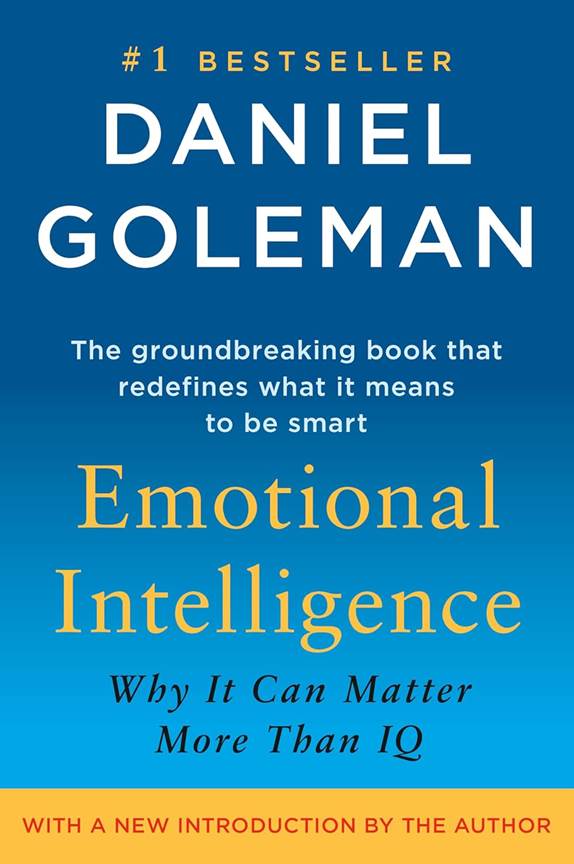
Goleman’s model breaks it into five components: self-awareness, self-regulation, motivation, empathy, and social skills.
Why it matters: Running a bar with friends sounds fun.
And it was, until it wasn’t.
The moment money gets involved, the moment stress escalates, the moment someone feels undervalued — you find out very quickly who in the room has emotional intelligence and who doesn’t.
I’ve watched business partnerships and friendships dissolve overnight over things that could have been handled with a single honest, calm conversation.
EI is what allows you to separate the heat of the moment from the logic of the situation. It’s what lets you lead people rather than just manage them.
And in every study done on workplace performance, emotional intelligence correlates more strongly with long-term success than IQ does.
Key practices to develop:
- Keep a journal to reflect on emotional reactions at work
- Practice active listening — focus fully on the other person, not your response
- Pause before reacting in tense situations
- Seek feedback on how others perceive you emotionally
3. Communication Skills
What it is: Communication is the process of conveying information from one person or group to another.
In a professional context, this encompasses verbal communication, written communication, nonverbal cues (body language, tone, eye contact), and listening.
Effective communication is not just about speaking clearly — it’s about ensuring your message is received and understood as intended.
Why it matters: I wrote theses for people.
Not because I was smarter than them, but because I could translate complex ideas into clear, readable language.
That skill alone opened more doors for me than any of my other jobs. Communication is the vehicle for everything else — your ideas, your expertise, your leadership.
Poor communication is one of the most frequently cited causes of workplace conflict, project failure, and missed promotions. You can have the best strategy in the room, but if you can’t explain it clearly or persuade others to believe in it, it stays in the room.
Key practices to develop:
- Write every day, even if it’s just a summary of your day
- Practice structuring your ideas before speaking (situation → complication → resolution)
- Record yourself presenting and watch it back
- Learn to read the room — adjust your register for different audiences
4. Critical Thinking
What it is: Critical thinking is the intellectually disciplined process of actively and skillfully conceptualizing, applying, analyzing, synthesizing, and evaluating information gathered from observation, experience, reflection, reasoning, or communication.
The Foundation for Critical Thinking defines it as “self-directed, self-disciplined, self-monitored, and self-corrective thinking.”
Why it matters: Selling diapers taught me this.
Not every pitch works.
Not every objection means “no.” You have to analyze why something isn’t landing, re-examine your assumptions, and adjust. The same applies to every decision you’ll make in your career — from evaluating a job offer to challenging a flawed strategy in a meeting.
Critical thinking is what protects you from being swept up in groupthink, from making expensive emotional decisions, and from accepting the first answer when a better one exists.
In a world flooded with information, the ability to evaluate what’s credible, what’s relevant, and what’s actionable is a career-defining skill.
Key practices to develop:
- Ask “why” and “so what?” at every step of a process
- Steelman opposing arguments before dismissing them
- Study logical fallacies so you can recognize them
- Practice reading peer-reviewed sources, not just opinion content
5. Collaboration
What it is: Collaboration is the process of two or more people or organizations working together to complete a task or achieve a goal.
It is distinct from simple cooperation — true collaboration involves shared ownership, mutual accountability, and the integration of diverse perspectives toward a common outcome.
Why it matters: Events crew work is pure collaboration under pressure.
There is no room for ego when the stage has to go up in four hours.
Everyone has a role.
Everyone depends on everyone else.
When it works, it’s beautiful.
When someone decides their comfort matters more than the team’s goal, the whole thing falls apart.
In any organization, your ability to collaborate — across departments, across seniority levels, across personality types — determines how far you can go.
Leaders who can’t collaborate become isolated.
Individual contributors who can’t collaborate get passed over.
The people who rise are usually the ones who made everyone around them better.
Key practices to develop:
- Volunteer for cross-functional projects early in your career
- Practice giving credit generously and taking responsibility for failures
- Learn to manage conflict constructively — address it, don’t avoid it
- Develop your ability to give and receive feedback without defensiveness
6. Adaptability
What it is: Adaptability is the capacity to adjust to new conditions.
In professional contexts, it refers to your ability to respond positively and effectively to changing circumstances — new technologies, new roles, new team dynamics, organizational restructuring, or market disruptions.
Adaptability is closely related to resilience: the ability not just to survive change, but to grow through it.
Why it matters: My career never followed a plan because there was never a plan.
Disc jockey to retail manager to pharmacy help to bar guy to events crew.
Each transition required me to discard assumptions, learn new rules quickly, and figure out how to add value in an unfamiliar environment.
The working world changes faster now than at any other point in history.
Industries are disrupted by AI.
Job titles that existed five years ago no longer exist.
Entire departments get restructured.
The professionals who thrive are not the most specialized — they’re the most adaptable.
Key practices to develop:
- Deliberately place yourself in situations outside your comfort zone
- Learn new tools and technologies before you need them
- Develop a growth mindset: treat challenges as information, not failure
- Study industries adjacent to yours
7. Influence
What it is: Influence, in a professional context, is the ability to affect the thoughts, decisions, and actions of others without relying on positional authority or coercion.
It draws on trust, credibility, emotional connection, and the ability to present ideas compellingly.
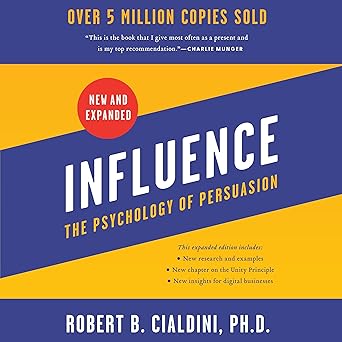
Robert Cialdini‘s research identifies six core principles of influence: reciprocity, commitment, social proof, authority, liking, and scarcity.
Why it matters: You don’t have to be the boss to influence outcomes.
The most effective people I’ve worked alongside — in every context — were not necessarily the most senior.
They were the ones people listened to.
They had built enough trust, demonstrated enough competence, and communicated with enough clarity that their voice carried weight.
Influence is what lets you advocate for your team, get resources for your projects, shift culture in a positive direction, and build a reputation that precedes you. It’s also the skill that scales: the broader your influence, the greater the impact you can have.
Key practices to develop:
- Focus relentlessly on building trust before trying to persuade
- Understand what matters to the people you’re trying to influence
- Develop your personal credibility through consistent delivery
- Practice public speaking and storytelling
Pros and Cons: What Developing These Skills Does to Your Relationships at Work
| Pros | Cons | |
| Time Management | Colleagues see you as reliable and dependable | Can create friction if others don’t value timeliness as much as you do |
| Emotional Intelligence | People feel heard, respected, and understood around you | You may absorb others’ stress more readily; can be emotionally draining |
| Communication | Clarity reduces misunderstandings and builds trust | You may be asked to carry communication for teams who struggle with it |
| Critical Thinking | Helps teams avoid costly mistakes; you ask better questions | Can make you appear skeptical or difficult if not paired with tact |
| Collaboration | Builds deep working relationships and a positive reputation | Requires significant energy; working with difficult people tests your limits |
| Adaptability | Makes you resilient and valued during times of change | May be taken for granted — “you’re flexible, you’ll be fine” |
| Influence | Allows you to drive positive outcomes without a title | Influence misapplied — or perceived as manipulation — damages trust instantly |
No skill exists in a vacuum.
Developing them makes you a better professional and a better person to work with, but each one also requires calibration.
Too much of anything, even a strength, can become a liability.
Where to Start
If I had to do it over again, I would have started with books. There’s something about reading a framework before you’re thrown into a situation that gives you the ability to recognize what’s happening — and respond rather than just react.
Start with the theory. Understand why time management works before you try to implement a system. Read Goleman on emotional intelligence before your first high-stakes conversation. Study communication frameworks before your next big presentation.
Then go out and practice.
Take on a project.
Volunteer for the uncomfortable assignment.
Ask to lead something small.
The practical application without the theoretical foundation is just trial and error.
With it, every experience becomes a data point in a framework you actually understand.
You don’t need hardship to develop these skills.
I had it forced on me.
You have the choice to pursue it intentionally — and that puts you in a far better position than I was when I started.
Learn first. Then act.
These seven skills are not a checklist. They’re a lifelong practice. The further you go in your career, the more you’ll rely on them — and the more you’ll wish you had started earlier.